A KNIFE SMITHY IN SAKAI
One knife.
Made for you.
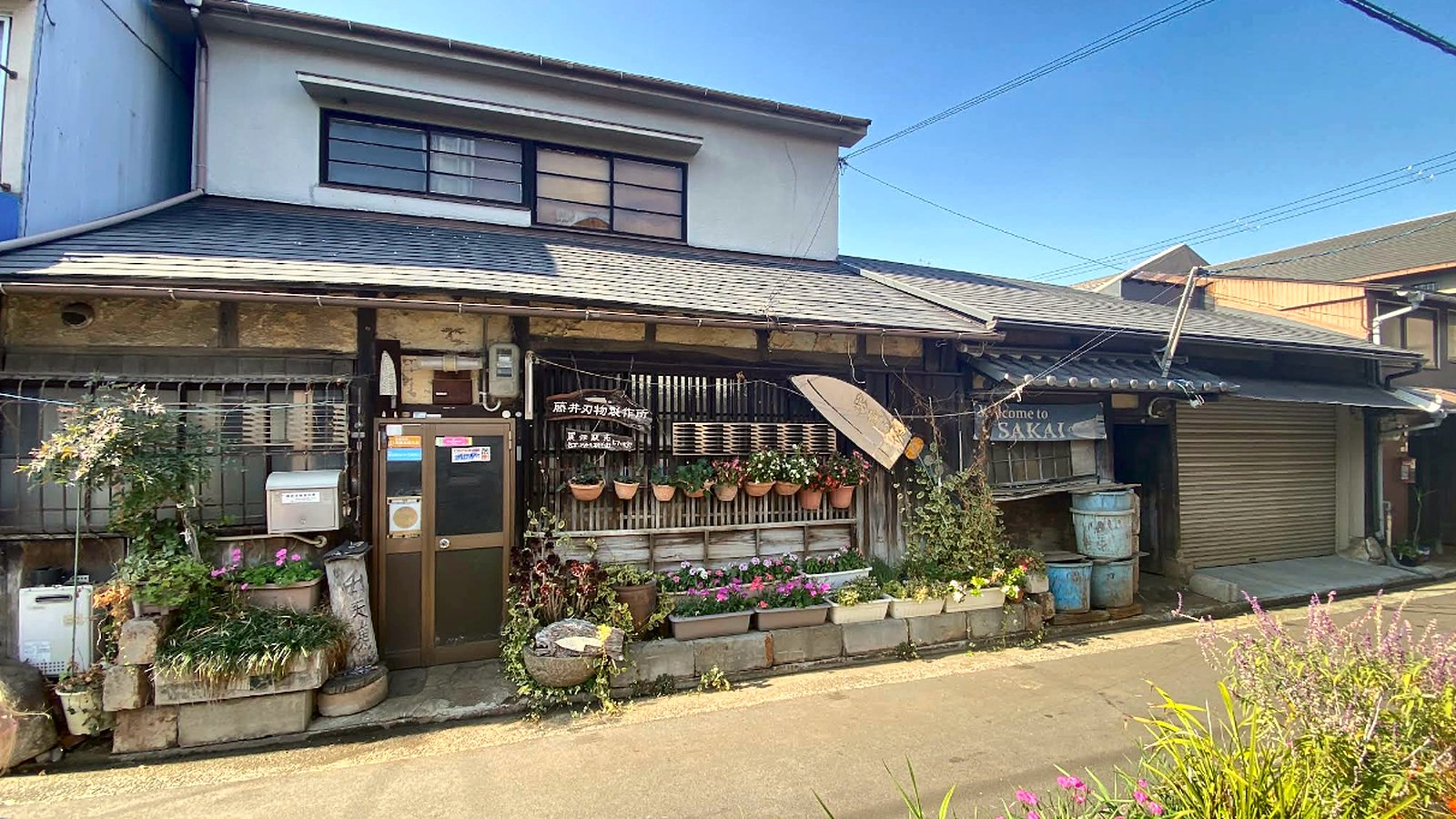
Sakai knives, and our workshop
Knifemaking in Sakai goes back some 600 years, and Sakai forged knives are an officially designated traditional craft of Japan.
Here, forging, sharpening and handle-fitting are usually done by separate specialists. Fujii Knife Works does all of it in one workshop.
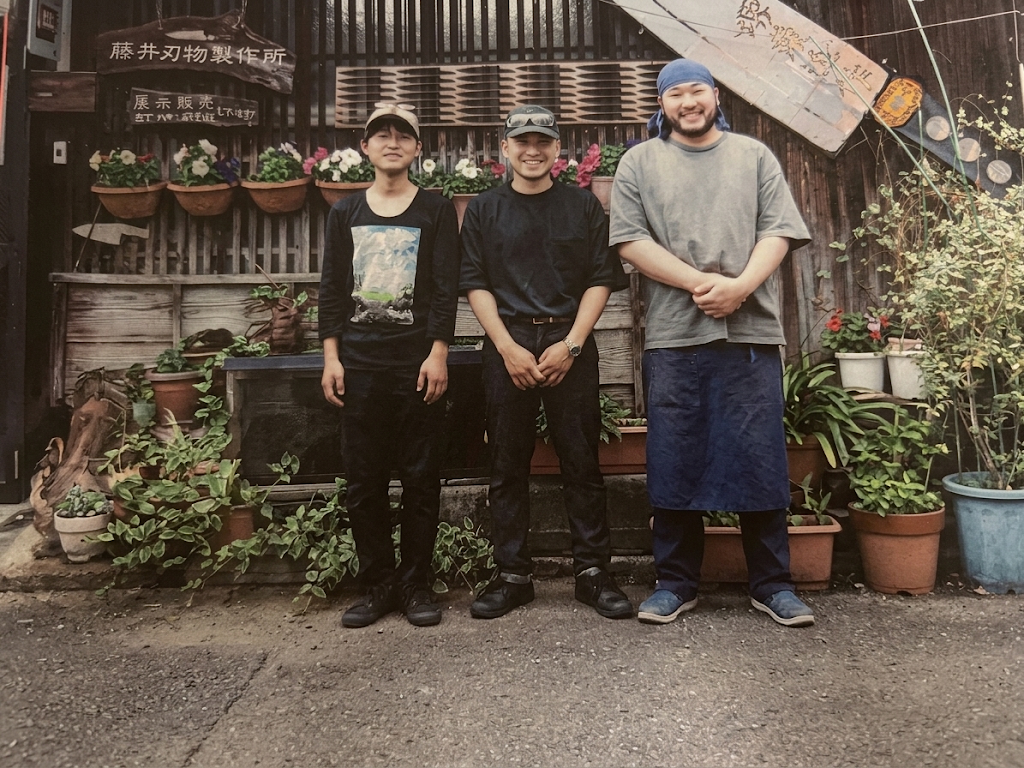
The people who forged and sharpened your knife are right here. Ask them about choosing a knife or resharpening.
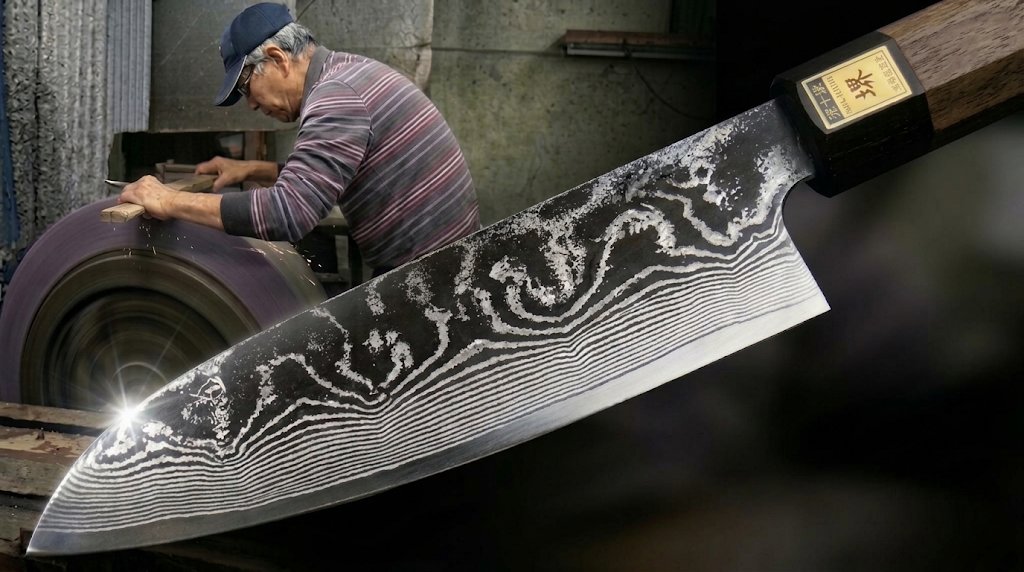
Keiichi Fujii
Knifesmith in Sakai · over 60 years at the forge
THE CRAFTSMAN & MEDIA
Every knife carries weight
When he works hard, it turns into someone's smile. That is what keeps him at the forge.
01Learned by watching
Raised in a family of craftsmen, from his grandfather to his father, he helped in the workshop as a child. Skills were not taught; you watched and learned. That is why he still goes and asks whenever he wants to know more.
▶ Watch from 1:4002Your one knife
He has made hundreds of thousands of knives. But for the person who holds one, it is the only one. He never forgets that.
▶ Watch from 3:4003Passing it on
His goal now is to train the next generation to make knives to the standard he holds himself to.
▶ Watch from 4:2404Meeting the people who use them
Talking with customers and seeing them smile is, he says, the greatest joy of his working life.
▶ Watch from 5:32How a knife is made
More than ten steps, all by hand. Here are the five main ones.
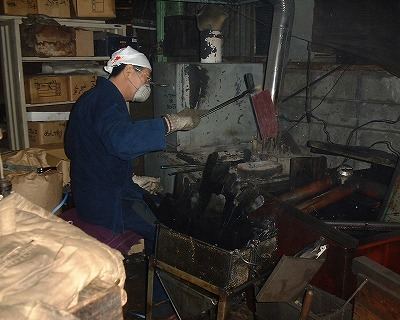
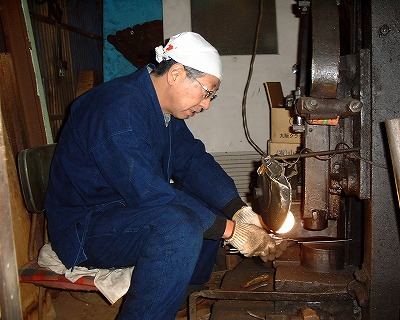 01 · 生だたき
Forging
Steel is hammered at room temperature with a belt hammer to tighten it.
 02 · 焼入れ
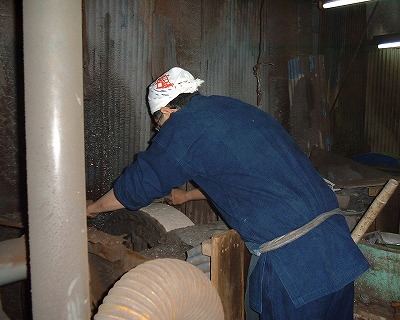
Hardening
The blade is heated to 780–800°C, then cooled fast to harden the edge.
 03 · 刃付け
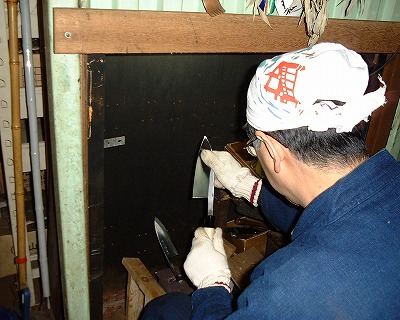
Sharpening
Ground on whetstones to form the edge and the shape.
 04 · 柄付け
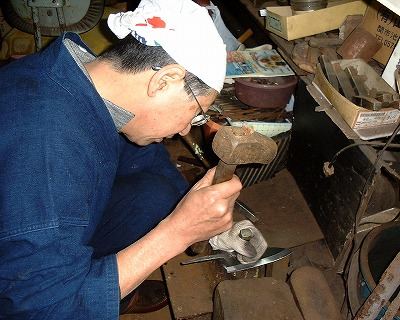
Handle fitting
The finished blade is fitted with a handle that sits well in the hand.
 05 · 銘切り
Engraving
Our mark, Sakai Kanechika, is cut into the blade.
Our knives
Five series, by type of steel. See every knife and its price on the next page.
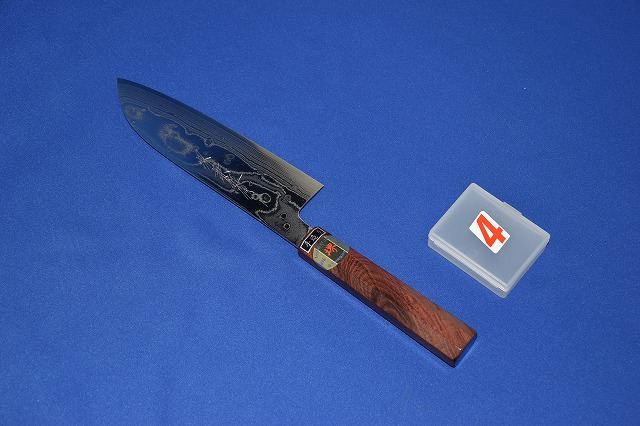 10A Nickel Damascus
AUS-10 stainless core clad in nickel Damascus layers. Rust-resistant, and every pattern is unique.
See all →
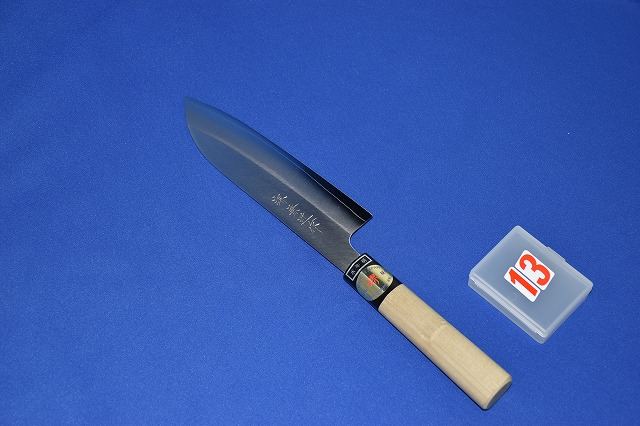 VG10
VG10 stainless core clad in stainless steel. Rust-resistant and easy to care for.
See all →
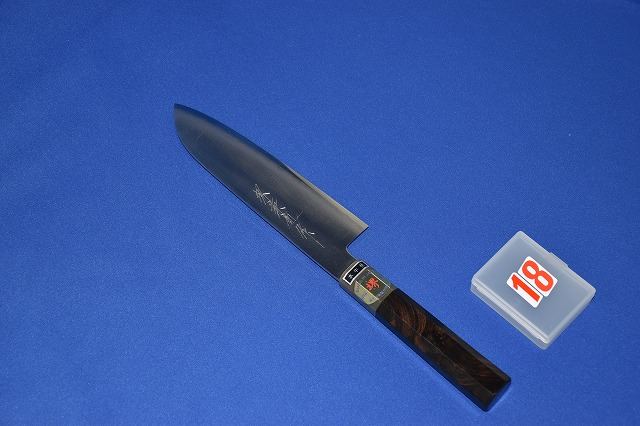 Ginsan, three-layer
Ginsan stainless core, hand-forged by the smith. Rust-resistant, with an ebony handle.
See all →
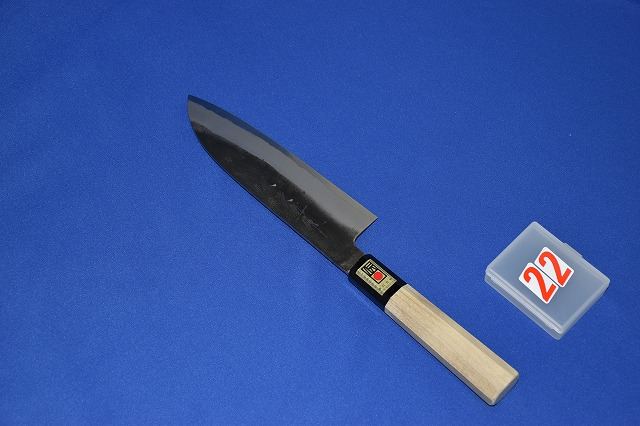 Yasuki steel
White #2 and Blue #2 steel cores clad in iron, hand-forged. A designated traditional craft.
See all →
Photo coming soon
Special steels
Mirror-finish dice steel and Strix knives.
See all →
Visit us
NOTICEHands-on classes are currently suspended. Workshop visits are available by phone.
- Address
- 1-2-21 Kitahatagocho-nishi, Sakai-ku, Sakai, Osaka
- Station
- 10 min walk from Shichido Sta. (Nankai Main Line)
4 min walk from Takasu-jinja Sta. (Hankai Tramway) - Parking
- None (coin parking nearby)
- Hours
- 9:00–18:00 (Closed: Sundays and national holidays)We are often out for lunch between 12:00 and 13:00. Visiting just outside that hour lets us give you our full attention.
- Payment
- Cash or card
- fujiihamono@gmail.com
- Phone
- +81-72-232-4097